Best Home Water Filter | A Straight-Talking Guide to Every Type
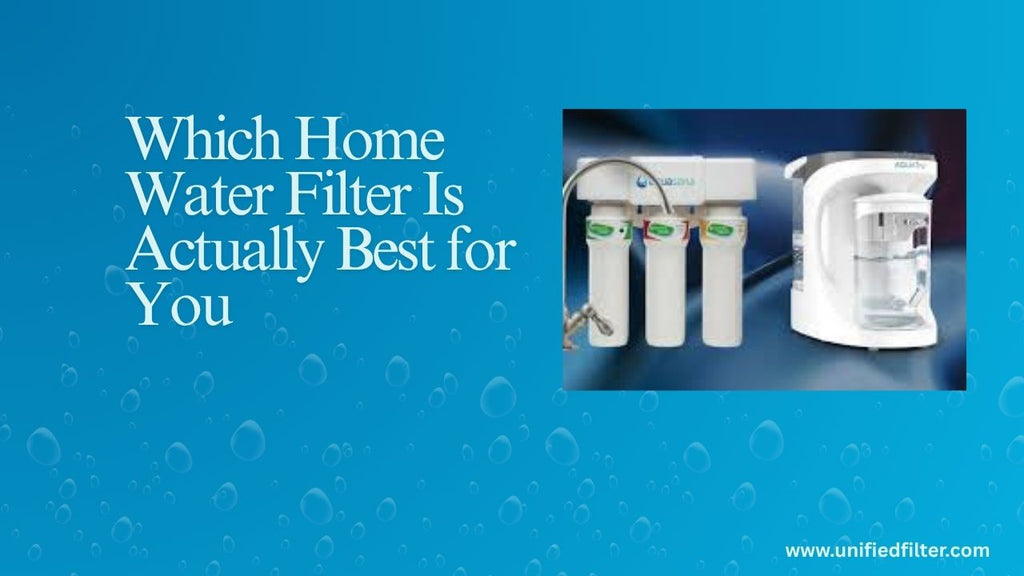
The best home water filter depends entirely on what you need it for. If you own a Whirlpool, KitchenAid, or Maytag fridge, your best option is already built in. If you want filtered water at the kitchen tap an under sink system beats a pitcher every time for families of three or more. And if PFAS contamination is your concern only a certified RO or whole house system will actually do the job.
Over 43 million Americans rely on private wells for their water supply, which receive no federal quality monitoring. And even on municipal water, the EPA’s 2024 PFAS limits revealed just how widespread contamination had become.
The problem is the sheer number of options; Pitchers, Faucet mounts, Under sink systems. Reverse osmosis. The whole house. Fridge filters. They all promise clean water but they are not all the same, and the best home water filter for one household is the wrong choice for another. This guide cuts through the noise and tells you exactly which type makes sense for your situation with honest pricing and no fluff.
What Are the Different Types of Home Water Filters?
There are six main types of home water filters. They differ in where they install, what they filter, how much they cost, and how much effort they require. Here is a complete side-by-side.
| Filter Type | Best For | Contaminants | Installation | Cost | Annual Filter Cost |
| Fridge filter | Drinking + ice | Up to 24 (NSF 401) | None — twist in | $0 | $90-$110 |
| Pitcher filter | Small households | 7-10 (NSF 42/53) | None | $25-$50 | $60-$120 |
| Faucet mount | Kitchen tap | 10-15 | 5 minutes | $25-$50 | $40-$80 |
| Under sink | Kitchen tap, high volume | Up to 100+ | 30-60 min | $150-$400 | $80-$320 |
| Reverse osmosis | Comprehensive home | 99%+ TDS removal | Professional | $200-$600 | $75-$145 |
| Whole house | Every tap in home | Chlorine, VOCs, PFAS | Professional | $800-$2,000+ | $150-$300 |
A few things worth noting about this table. The first contaminant count alone does not tell the full story. A fridge filter certified to NSF 401 reduces pharmaceuticals and BPA that most pitcher filters never touch, even though pitchers technically reduce more ‘types’ in marketing materials. Second, annual filter cost is often more important than upfront price. A $30 pitcher with $120 annual filter costs is more expensive over 3 years than a $400 under sink system with $80 annual costs.
Which Home Water Filter Is Actually Best for Your Situation?
There is no single best water filter for the home, only the best one for your household’s specific needs, budget, and setup. Use this decision guide,
| Your Situation | Best Filter Type | Why |
| Already have a Whirlpool/KitchenAid/Maytag fridge | Fridge filter (EveryDrop OEM) | Zero installation, 24 contaminants, $0 upfront |
| Renting, cannot modify plumbing | Pitcher or faucet mount | No installation, portable, affordable |
| Family of 4+, high water usage | Under sink or RO system | High volume output, comprehensive filtration |
| Well water or high TDS | Reverse osmosis | Removes 99%+ dissolved solids and heavy metals |
| Want filtered water at every tap | Whole house system | Point of entry — treats all water entering home |
| PFAS contamination concern | RO or certified whole house | NSF/ANSI 58 or P473 certified systems remove PFAS |
If you already own a Whirlpool, KitchenAid, Maytag, Amana, Jenn-Air, or Kenmore refrigerator you already have a built-in filtration system. A genuine EveryDrop fridge filter costs $0 to install and reduces 24 certified contaminants. It is the most overlooked home filtration option in the US.
Is Your Fridge Filter Actually One of the Best Home Water Filters?

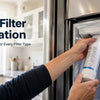
Most home water filter guides barely mention the fridge filter and that is a mistake. If you own a Whirlpool-family refrigerator, you already have a best-in-class filtration system built into your kitchen. No installation. No countertop clutter. No extra plumbing. Just a filter that screws in and out in under 3 minutes.
The genuine EveryDrop fridge filter is NSF 42, 53, and 401 certified, reducing 24 contaminants including lead, mercury, cysts, pharmaceuticals, BPA, and chlorine. That is more certified contaminant coverage than most pitcher filters and many faucet mounts at a fraction of the total cost of ownership.
The only thing it does not do is filter all the water in your home, just the water and ice from your fridge dispenser. If your concern is specifically drinking and cooking water, that is all you need. If you want filtration at every tap in the house, you need a whole house or RO system in addition.
Which EveryDrop Fridge Filter do you Need?
Check the label on your current installed filter, it will say Filter 1, 2, 3, 4, or 5. Use that number to find your replacement below:
| Brand | Filter Number | Part Number | Shop |
| Whirlpool | Filter 1-5 | EDR1-5RXD1 | UnifiedFilter.com |
| KitchenAid | Filter 1-4 | EDR1-4RXD1 | UnifiedFilter.com |
| Maytag | Filter 1-3 | EDR1-3RXD1 | UnifiedFilter.com |
| Amana / Jenn-Air / Kenmore | Filter 1-4 | EDR1-4RXD1 | UnifiedFilter.com |
Are Pitcher Filters Worth It for Home Use?
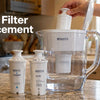
Pitcher filters like Brita or PUR are the most purchased home water filters in America. And for a 1-2 person household with basic chlorine and taste concerns, they do the job at the lowest upfront cost.
But they have real limitations. Most are only NSF 42 and 53 certified covering chlorine, lead, and a handful of other contaminants. They do not touch pharmaceuticals, BPA, or PFAS. They hold about 10 cups of water, which means a family of four is constantly refilling. And the annual filter cost adds up faster than people expect most pitcher filters need replacing every 2 months.
If you rent, travel frequently, or just want an affordable backup option a pitcher filter makes sense. If you have children, elderly family members, or any health concerns the contaminant coverage is not comprehensive enough to rely on as your only filtration.
Pitcher filters are a starting point, not a solution for households with real health concerns.
When Does It Make Sense to Get an Under Sink or RO Filter?
Under sink filters and reverse osmosis systems are the heavy-hitters of home water filtration and they come with heavy-hitter price tags to match. But for the right household, they are absolutely worth it.
Under sink filters

An under sink filter installs below your kitchen counter and connects directly to your cold water line. You get a continuous flow of filtered water at the kitchen tap, no refilling, no countertop unit. Quality systems from brands like APEC or iSpring remove hundreds of contaminants, including VOCs, heavy metals, and select PFAS.
Installation takes 30-60 minutes and requires basic plumbing confidence. Filter replacements run $80-$320 per year depending on the system. For a family of 4+ that does most of its drinking and cooking from the kitchen tap, this is one of the best home filtered water systems available.
Reverse Osmosis Systems

RO systems force water through a semipermeable membrane, removing up to 99% of total dissolved solids, including fluoride, heavy metals, nitrates, and most PFAS compounds. They are the most comprehensive filtration option available for home use.
The downside is that they are slow (typically storing filtered water in a tank), they waste 3-5 gallons for every gallon filtered, they require periodic maintenance, and they cost $200-$600 upfront. For households on well water, with high TDS readings, or with confirmed PFAS contamination the tradeoff is worth it. For city water households without specific contamination concerns an under sink carbon filter is usually sufficient.
Is a Whole House Water Filter Worth the Investment?
A whole house water filter, also called a point-of-entry system, is installed on the main water line entering your home, so every tap, shower, and appliance gets filtered water. It is the most comprehensive home water filtration system option available.
The best systems, like the SpringWell CF1, use catalytic carbon and KDF media to remove chlorine, chloramines, VOCs, and PFAS. Independent lab testing showed the SpringWell CF1 reduced chlorine byproducts from 31.8 ppb to non-detect after more than 3 years of use.
These systems cost $800-$2,000+ and usually require professional installation. Annual maintenance runs $150-$300. For most households on clean municipal water, this level of filtration is overkill. Where whole house systems genuinely make sense: well water households, homes with lead pipes, areas with documented PFAS contamination, or households where skin and hair sensitivity to chlorinated water is a concern.
Whole house systems are the right call for specific contamination problems, not a default upgrade for every home.
What About PFAS, Does Your Home Water Filter Remove It?
PFAS per and polyfluoroalkyl substances became a major concern in 2024 when the EPA established the first nationwide limits. These synthetic chemicals have been linked to serious health effects and are found in water supplies across much of the US.
Here is what actually removes PFAS:
- Reverse osmosis systems — most effective, removes 94-99% of PFAS
- Activated carbon block filters (NSF/ANSI 58 or P473 certified) — removes select PFAS compounds
- Whole house systems with certified PFAS media — removes PFAS at every tap
Standard pitcher filters, faucet mounts, and fridge filters are not certified for PFAS removal. If PFAS is a specific concern in your area, get your water tested first (EPA-certified labs like SimpleLab or National Testing Laboratories), then choose a system certified for the specific compounds found.
Check the EWG Tap Water Database (ewg.org/tapwater) to see what contaminants have been detected in your local water supply. It is free and covers most US zip codes.
Frequently Asked Questions
What is the best home water filter overall?
For Whirlpool-family fridge owners, the built-in EveryDrop filter. For whole-kitchen filtration, under sink. For renters, a pitcher.
Do I need a whole house water filter?
Only if you have well water, documented PFAS contamination, or want filtered water at every tap in the house.
What water filter removes the most contaminants?
Reverse osmosis systems remove up to 99% of TDS including PFAS, fluoride, heavy metals, and dissolved solids.
Are fridge water filters as good as under sink filters?
Yes, Genuine EveryDrop OEM filters reduce 24 NSF-certified contaminants including pharmaceuticals and BPA, which most under sink carbon filters do not cover.
How much does a home water filter system cost?
Pitchers $25+, fridge filters $45-$55, under sink $150-$400, RO systems $200-$600, whole house systems $800+.
Do home water filters remove PFAS?
RO systems and NSF P473-certified carbon filters remove PFAS. Standard pitcher filters and most fridge filters do not.
Where Should You Buy Your Home Water Filter?
If you own a Whirlpool, KitchenAid, Maytag, Amana, Jenn-Air, or Kenmore refrigerator. The best home water filter for your drinking water is already built into your kitchen. You just need to keep it fresh. UnifiedFilter.com stocks all five genuine EveryDrop filter types with fast USA shipping.
UnifiedFilter.com stocks all five genuine EveryDrop filter types Filter 1 through 5 in singles and 3-packs, with fast shipping across the USA. Check the label on your current installed filter, match it to the table above, and order the right one today.