Water Purifier for Home | What the Term Actually Means and Which Type Is Worth Buying
Let’s start with something most buying guides won’t tell you, water purifier is a marketing term, not a technical one. There is no single definition. A $25 Brita pitcher calls itself a purifier. So does a $500 countertop reverse osmosis system. So does a $30 UV wand. They all do very different things and buying the wrong one because of the label is one of the most common mistakes people make.
This guide cuts through the noise. Here is what each type of water purifier actually does, who each one is right for, and an honest look at the top-rated options in the USA right now, including where your fridge filter fits into the picture.
What Does ‘Water Purifier’ Actually Mean?
Technically, a water purifier should remove biological contaminants, bacteria, viruses, cysts not just chemicals and sediment. That is the distinction between a filter (removes chemicals and particles) and a purifier (removes biological threats too). But in practice, the word is used for anything from a basic pitcher to a full reverse osmosis system.
What actually matters is the NSF certification on the specific product you are buying. That number tells you exactly what has been independently verified to be removed, regardless of what the marketing says on the box.
Here is the quick certification guide:
- NSF 42 — chlorine taste and odor only
- NSF 53 — lead, cysts, and specific chemicals
- NSF 401 — pharmaceuticals, BPA, emerging contaminants
- NSF 55 — bacteria and virus removal (UV systems)
- NSF 58 — reverse osmosis performance (TDS, fluoride, nitrates)
- NSF P473 — PFAS removal
A product can claim to be a ‘purifier’ without any NSF certification at all. Always check the certification, not the marketing name.
What Are the Different Types of Home Water Purifiers?

Here is an honest breakdown of every type, what each one actually does and who it is right for:
| Type | How It Works | Best For | Price Range | Needs Plumbing? |
| Countertop RO + UV | RO membrane + UV sterilization | Renters, apartments, dorms | $200-$500 | No |
| Electric pitcher | Carbon + electric push dispensing | Small households, fridge storage | $60-$150 | No |
| Gravity pitcher | Gravity-fed carbon filter | Budget buyers, basic taste/chlorine | $25-$50 | No |
| UV sterilizer (standalone) | UV light kills bacteria/viruses | Well water, travel, emergency prep | $30-$150 | No |
| Gravity-fed ceramic | Ceramic + carbon, no electricity | Off-grid, power outage prep | $150-$400 | No |
| Fridge filter (EveryDrop) | Carbon block, already built in | Whirlpool-family fridge owners | $45-$55 per filter | No — twist in |
The type you need depends on one thing, what is wrong with your water. A UV sterilizer does nothing for chlorine. A carbon pitcher does nothing for bacteria. Know your problem before you buy.
Are Countertop Water Purifiers Worth the Money?
Countertop purifiers especially RO + UV systems like the AquaTru Carafe or Waterdrop A1 are the most effective water purifiers for home use that require zero installation. They sit on your counter, connect to your faucet or fill manually, and can remove up to 200+ contaminants including PFAS, fluoride, nitrates, and bacteria.
Are Electric Water Filter Pitchers Worth It?

Electric pitchers, like the Waterdrop ED09W, filter faster than gravity pitchers, dispense with one touch, and the better models are certified to NSF 42, 53, and 401. At around $80, they outperform basic $25-$50 gravity pitchers on both speed and contaminant coverage.
The limitation is that they hold about 10 cups, fine for 1-2 people, but a household of four will be refilling constantly. At that point, a fridge filter or under sink system makes more practical sense.
Which Water Purifiers Are Worth Buying Right Now?
Here is an honest comparison of the top-rated water purifiers in the USA as of 2026 with no affiliate incentives driving the recommendations:
| Product | Type | NSF Certified | Price | Best For |
| AquaTru Carafe | Countertop RO | Yes — multiple | ~$280 | Best overall countertop RO |
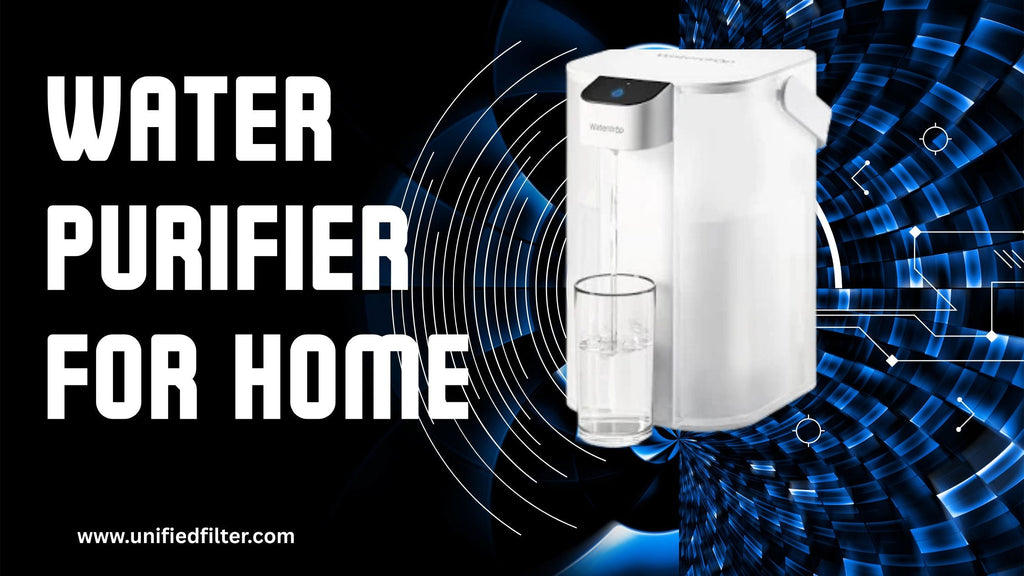
| Waterdrop A1 | Countertop RO + UV | Yes | ~$400 | Hot + cold + UV sterilization |
| Waterdrop ED09W | Electric pitcher | Yes — NSF 42/53/401 | ~$80 | Best value electric pitcher |
| Aquasana Clean Water Machine | Countertop carbon | Yes — PFAS certified | ~$100 | PFAS removal without RO cost |
| British Berkefeld | Gravity ceramic | NSF 372 | ~$300 | Off-grid, no electricity needed |
| EveryDrop OEM (fridge) | Built-in fridge filter | NSF 42/53/401 — 24 contaminants | $45-$55 | Whirlpool/KitchenAid/Maytag owners |
For renters and people who cannot install anything, the AquaTru Carafe is the gold standard countertop RO purifier. For households that just want better tasting water at low cost, the Waterdrop ED09W electric pitcher is excellent value.
For Whirlpool-family fridge owners, stop here. Your EveryDrop fridge filter already covers what most of these systems offer, at a fraction of the ongoing cost.
Do You Already Have a Built-In Water Purifier and Not Know It?
If you own a Whirlpool, KitchenAid, Maytag, Amana, Jenn-Air, or Kenmore refrigerator then Yes, you do. The genuine EveryDrop fridge filter is NSF 42, 53, and 401 certified, reducing 24 contaminants including lead, cysts, pharmaceuticals, BPA, and chlorine.
It is built into your fridge, costs zero to install, and needs replacing every 6 months for $45-$55.Most households searching for a water purifier already own one. They just have not been replacing the filter on schedule. An overdue EveryDrop filter stops working and can actually release trapped contaminants back into your water.
Replace it every 6 months and you have a certified home water purification system that most countertop units cannot beat on contaminant coverage.
Check the label on your current fridge filter, it will say Filter 1, 2, 3, 4, or 5. That is the exact replacement you need.
FAQs
What is the best water purifier for a home?
For renters or no-install situations, AquaTru Carafe countertop RO. For Whirlpool-family fridge owners, the built-in EveryDrop filter already covers 24 NSF-certified contaminants.
Is a water purifier better than a water filter?
Purifiers remove biological threats like bacteria and viruses. Filters remove chemicals and particles. Most households on city water need a filter, not a purifier.
Do water purifiers remove PFAS?
RO-based purifiers certified to NSF P473 or NSF 58 remove PFAS. Basic carbon pitchers and most UV systems do not.
Does a UV water purifier remove lead and chlorine?
No, UV purifiers only kill bacteria and viruses. They do not remove chemicals, lead, or chlorine.
How much does a home water purifier cost?
Electric pitchers run $60-$150. Countertop RO systems cost $200-$500. Built-in fridge filters (EveryDrop) cost $45-$55 per replacement, twice a year.